
Endpoint Security vs Antivirus: What Is the Difference?
As cyber threats evolve rapidly, securing all endpoints has become a top priority for businesses. Organizations must implement comprehensive solutions to protect desktops, laptops, and mobile devices from attacks.
Understanding the difference between Endpoint Security vs Antivirus is crucial for building an effective security strategy. While traditional antivirus protects against known malware, modern endpoint security platforms offer advanced threat detection, real-time monitoring, and proactive defense mechanisms.
AC Arab Computers helps enterprises in Egypt deploy robust endpoint security solutions tailored to their needs, ensuring full protection across all devices.
What Is Endpoint Security?
Endpoint Security is a comprehensive cybersecurity approach that protects devices such as PCs, servers, and mobile endpoints from a wide range of threats. Beyond basic virus protection, it includes features like:
- Advanced malware detection
- Threat intelligence and behavioral analysis
- Firewall and device control
- Data loss prevention and encryption
Modern endpoint security solutions often integrate EDR (Endpoint Detection and Response) to detect, investigate, and respond to suspicious activity, bridging the gap between prevention and active defense.
How Antivirus Differs from Endpoint Security
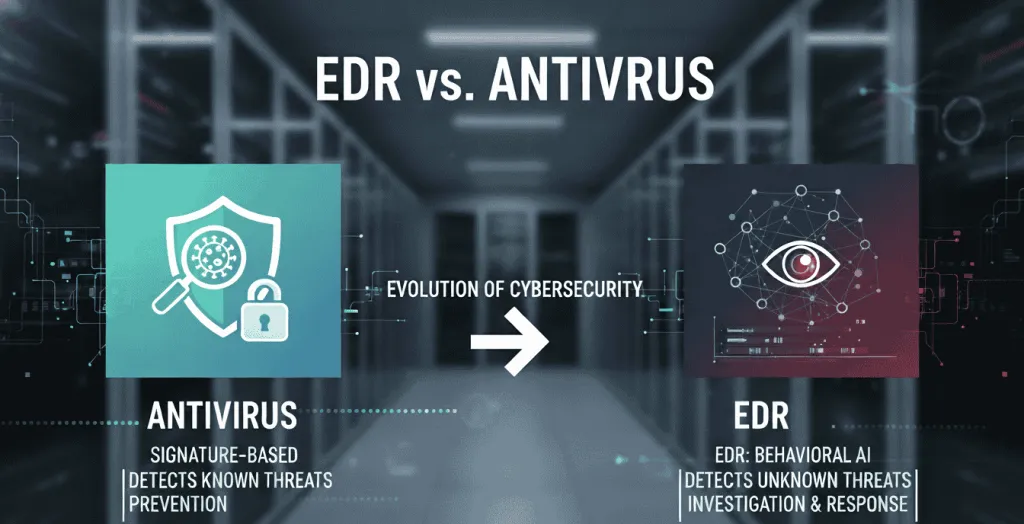
Traditional antivirus software is designed to detect and remove known threats such as viruses, worms, and trojans. Its protection is signature-based, meaning it relies on known malware patterns.
In contrast, endpoint security platforms:
- Include behavioral analysis to detect unknown threats
- Provide real-time monitoring and automated responses
- Integrate with centralized management for multiple devices
- Offer ransomware protection and advanced endpoint analytics
This distinction explains why enterprises increasingly move from standalone antivirus solutions to full-fledged endpoint security.
EDR vs Antivirus: Key Comparisons
- Detection: Antivirus detects known threats; EDR identifies suspicious behavior and zero-day attacks.
- Response: Antivirus removes detected malware; EDR can isolate compromised endpoints and initiate automated remediation.
- Visibility: Endpoint security offers a centralized dashboard to monitor all devices, unlike traditional antivirus.
Some popular industry comparisons, like antivirus vs EDR, highlight the enhanced capabilities of modern endpoint security platforms.
Windows Defender vs Symantec Endpoint Protection
When choosing endpoint protection, businesses often compare solutions like Windows Defender vs Symantec Endpoint Protection. Key considerations include:
- Threat detection capabilities
- Integration with existing IT infrastructure
- Centralized management and reporting
- Support for hybrid environments and cloud workloads
A reliable provider like AC Arab Computers can guide businesses in Egypt to select and implement the right endpoint security platform based on their requirements.
Benefits of Implementing Endpoint Security
- Protection against malware, ransomware, and phishing attacks
- Centralized management of all devices
- Automated threat detection and remediation
- Improved compliance with industry regulations
- Reduced downtime and operational risk
By transitioning from traditional antivirus to endpoint security, businesses gain comprehensive protection and real-time visibility across all endpoints.
Contact AC Arab Computers to:
- Deploy robust Endpoint Security solutions across all devices.
- Implement EDR for proactive threat detection and response.
- Protect against malware, ransomware, and phishing attacks.
- Ensure centralized management and compliance for enterprise endpoints in Egypt.
FAQs
1. What is the main difference between endpoint security and antivirus?
Antivirus protects against known malware, while endpoint security offers advanced detection, real-time monitoring, and automated response.
2. Can small businesses use endpoint security?
Yes, modern solutions scale to protect both small and large organizations efficiently.
3. What is EDR?
Endpoint Detection and Response (EDR) monitors endpoints, detects suspicious activity, and responds automatically to threats.
4. Is Windows Defender enough for enterprise protection?
For small setups, it can work, but enterprise environments benefit from full endpoint security platforms like Symantec or solutions deployed by AC Arab Computers.
