
Cloud Computing Explained: Benefits, Types, and Examples for Modern Busines
Introduction For decades, businesses in Alexandria relied on a simple model: buy a server, put it in a cold room, and install software from a CD. Today, that model is changing. Cloud Computing Explained is no longer just a buzzword; it is the standard for efficiency. But for a business owner or IT manager, the question remains: Is the cloud right for me, or should I stick to my physical servers?
At Arab Computers, we believe the future is not about choosing one or the other—it’s about choosing the right mix.
What is Cloud Computing?
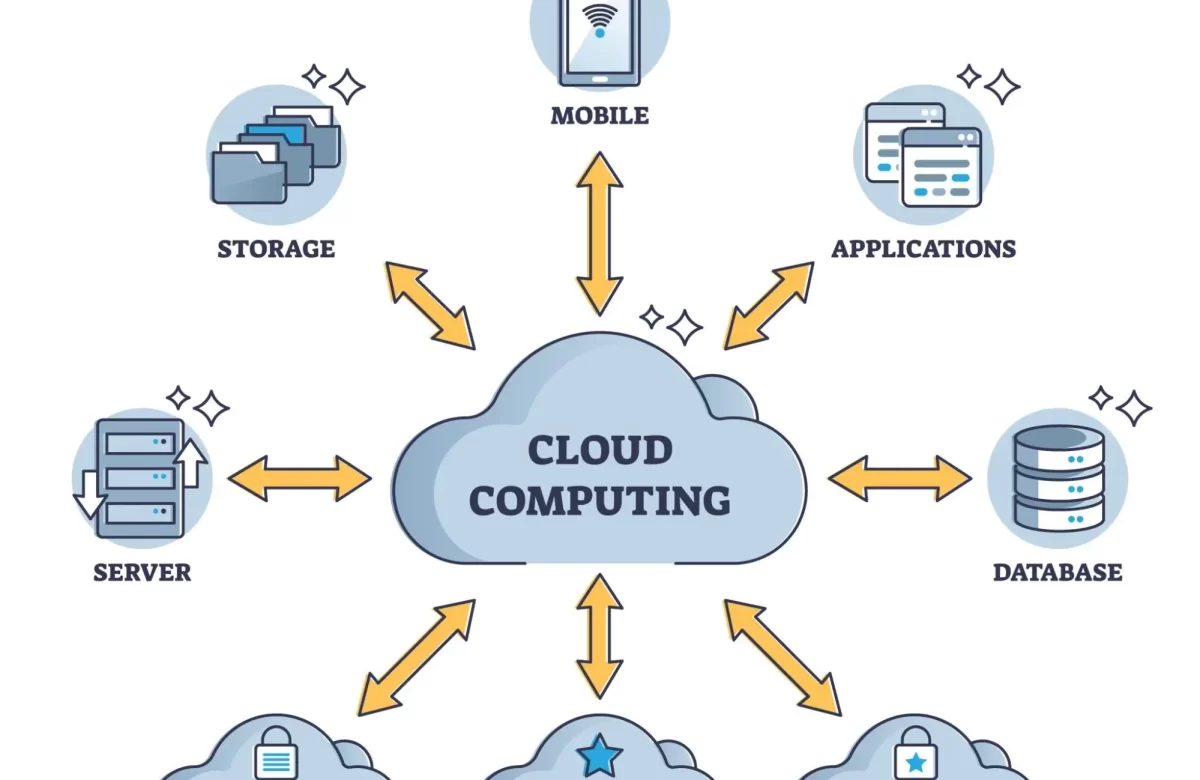
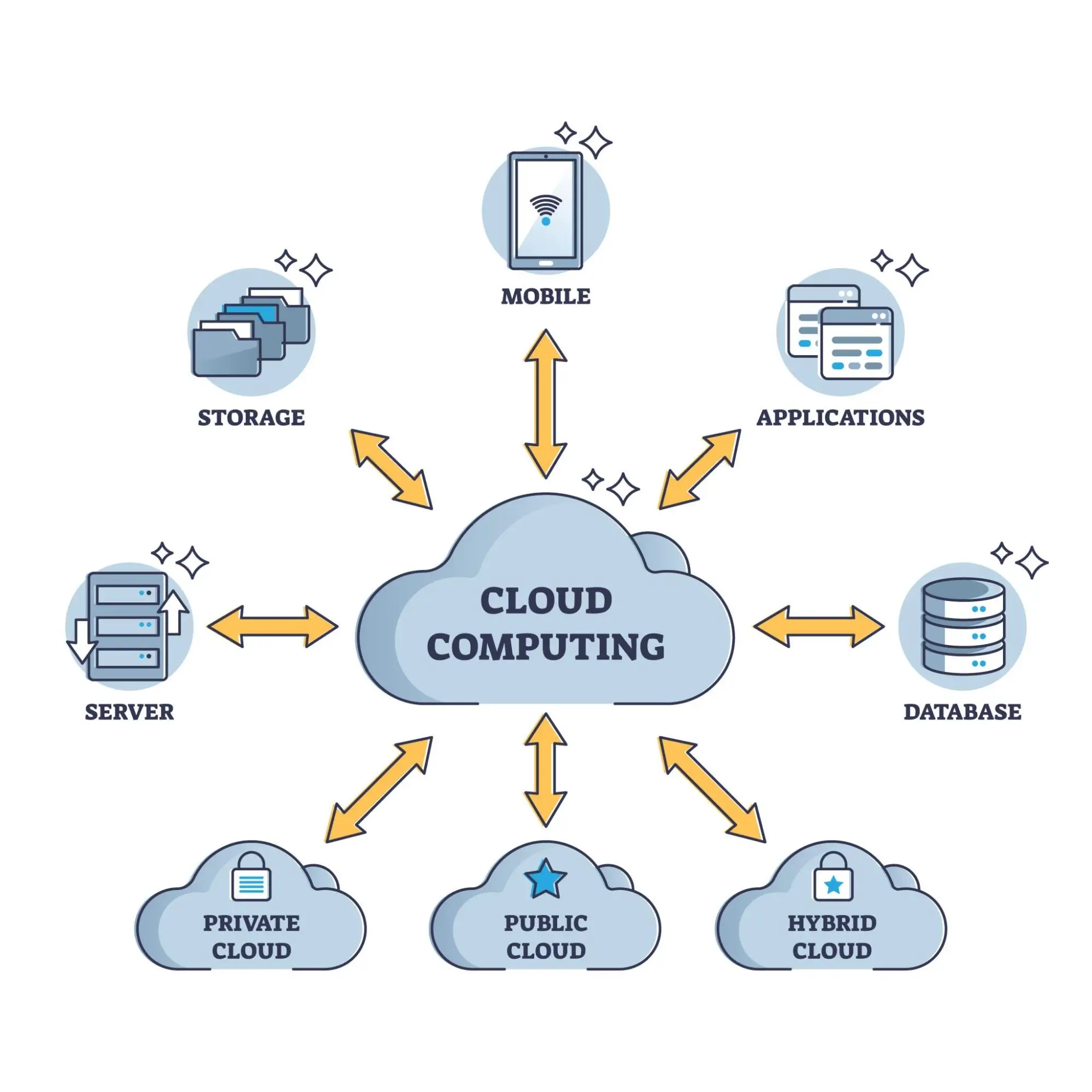
Simply put, cloud computing is the delivery of computing services—including servers, storage, databases, networking, software, and intelligence—over the Internet (“the cloud”) to offer faster innovation, flexible resources, and economies of scale.
Instead of owning their own computing infrastructure or data centers, companies can rent access to anything from applications to storage from a cloud service provider.
Top 4 Benefits for Your Business
1. Cost Efficiency
Cloud computing eliminates the capital expense of buying hardware and software and setting up and running on-site datacenters (the racks of servers, the round-the-clock electricity for power and cooling, the IT experts for managing the infrastructure).
- Arab Computers Tip: We help you calculate the TCO (Total Cost of Ownership) to see if a Cloud or Hybrid model saves you money.
2. Speed and Agility
Most cloud computing services are provided self service and on demand, so even vast amounts of computing resources can be provisioned in minutes. This gives businesses a lot of flexibility and takes the pressure off capacity planning.
3. Global Scale & Remote Work
With the cloud, you can access your data from anywhere—whether you are at your HQ in Alexandria, a branch in Cairo, or working from home. This is essential for modern teams using tools like Microsoft 365.
4. Security
Many cloud providers offer a broad set of policies, technologies, and controls that strengthen your security posture overall, helping protect your data, apps, and infrastructure from potential threats.
- Note: When combined with local security hardware (like Fortinet Firewalls), your protection becomes military-grade.
The 3 Types of Cloud Services
Most cloud computing services fall into three broad categories: IaaS, PaaS, and SaaS.
1. Infrastructure as a Service (IaaS)
You rent IT infrastructure—servers and virtual machines (VMs), storage, networks, operating systems—from a cloud provider on a pay-as-you-go basis.
- Example: Microsoft Azure, AWS.
2. Platform as a Service (PaaS)
Cloud computing services that supply an on-demand environment for developing, testing, delivering, and managing software applications. It is designed to make it easier for developers to create web or mobile apps.
3. Software as a Service (SaaS)
A method for delivering software applications over the Internet, on demand and typically on a subscription basis. Cloud providers host and manage the software application and underlying infrastructure.
- Example: Microsoft 365 (Office, Outlook, Teams)—which we provide licenses for at Arab Computers.
Deployment Models: Public, Private, or Hybrid?
This is the most important decision for your company.
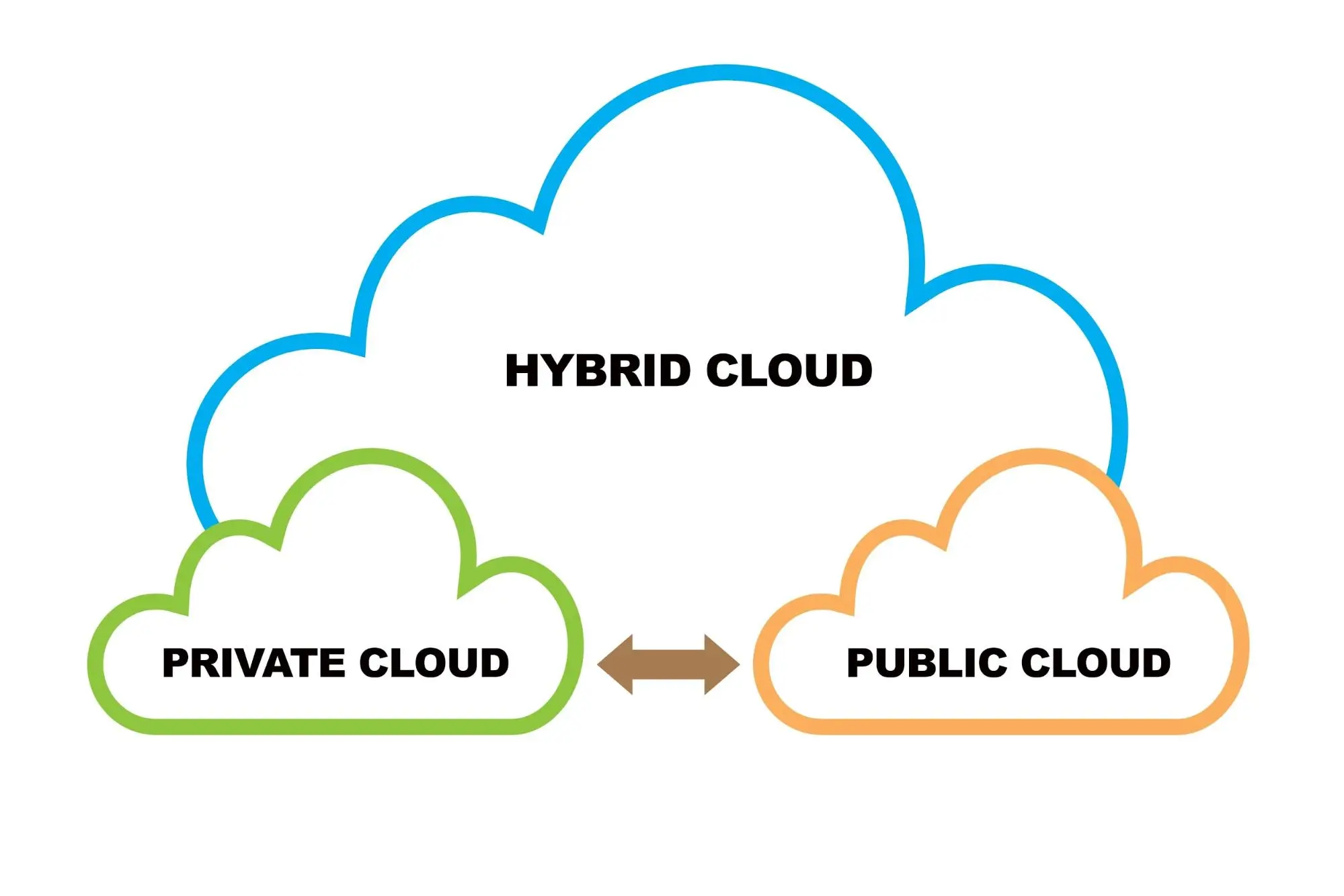
Public Cloud
Everything is owned and operated by a third-party cloud service provider. You access these services and manage your account using a web browser.
Private Cloud
Cloud computing resources used exclusively by a single business or organization. A private cloud can be physically located on the company’s on-site datacenter.
- The Arab Computers Advantage: We can build your Private Cloud using high-performance servers from HP, Dell, or Lenovo, giving you total control over your data within your own office.
Explore
Hybrid clouds combine public and private clouds, bound together by technology that allows data and applications to be shared between them. By allowing data and applications to move between on-premises private clouds and public clouds, a hybrid cloud gives your business greater flexibility.
Real-World Examples in Your Office
You are likely already using the cloud without realizing it:
- Email: If you use Outlook or Gmail, you are using SaaS.
- Storage: Using Google Drive or OneDrive to share files with clients.
- Security: Using FortiGate Cloud to manage your firewalls remotely.
How Arab Computers Can Help
You don’t have to navigate the cloud alone. As an Authorized Agent, we help you find the perfect balance.
- We supply the Hardware (Servers/Workstations) for your on-premise Private Cloud.
- We provide the Software (Microsoft 365, Antivirus) for your productivity.
- We offer the Consultation to set up a Hybrid environment that fits your budget.
